 Fraunhofer Institute for High Frequency Physics and Radar Techniques FHR
Imaging Driverless Transport Systems (DTS) are increasingly used by organizations with a focus on security and defense in various fields. However, DTS do not always have access to a GPS signals for orientation, for example indoors. Radar technology offers a robust alternative: In the Platon project, Fraunhofer FHR together with Fraunhofer IZM and other project partners developed a system demonstrator for ground-based environment sensing via imaging with Synthetic Aperture Radar (SAR).

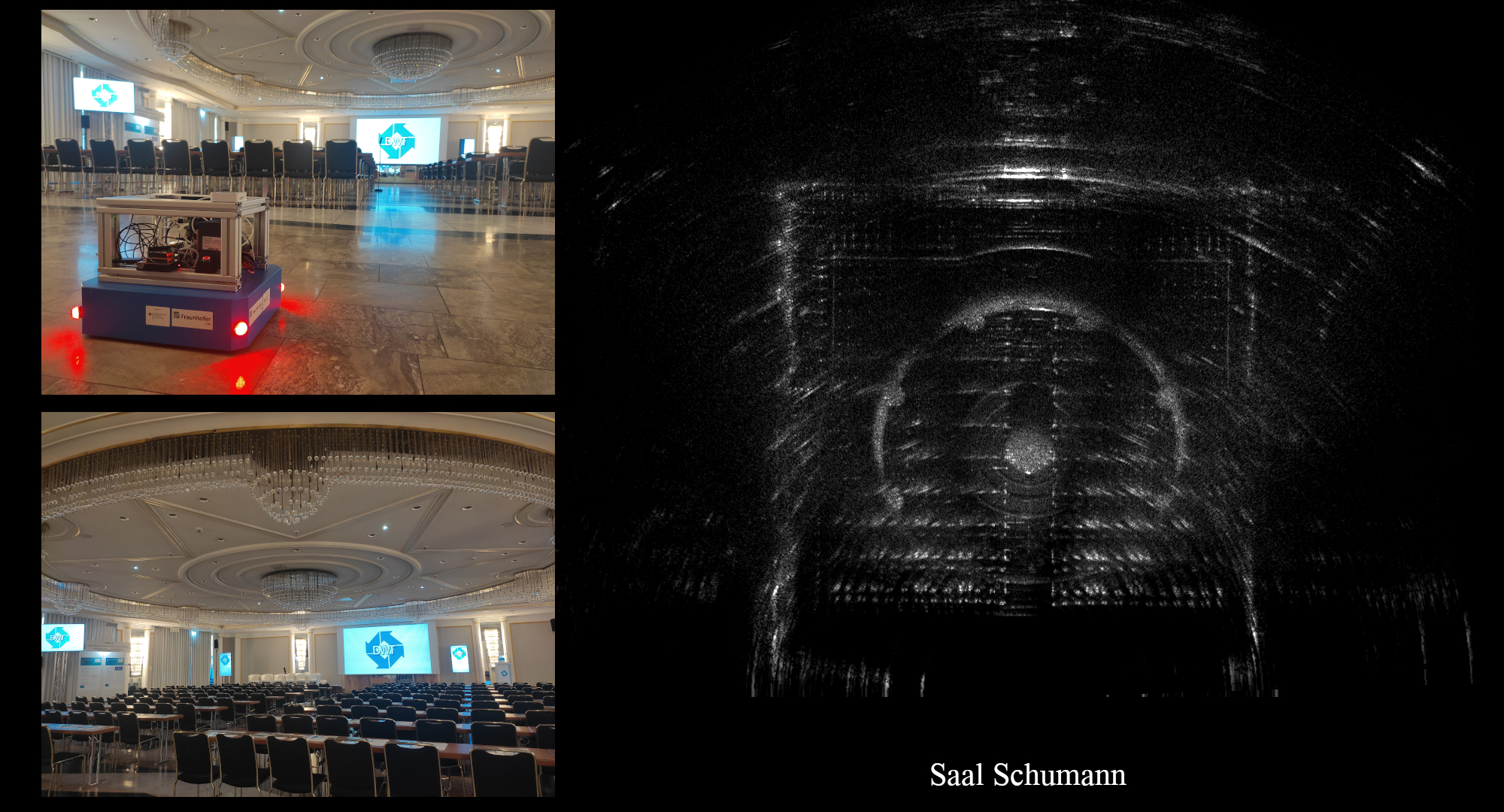
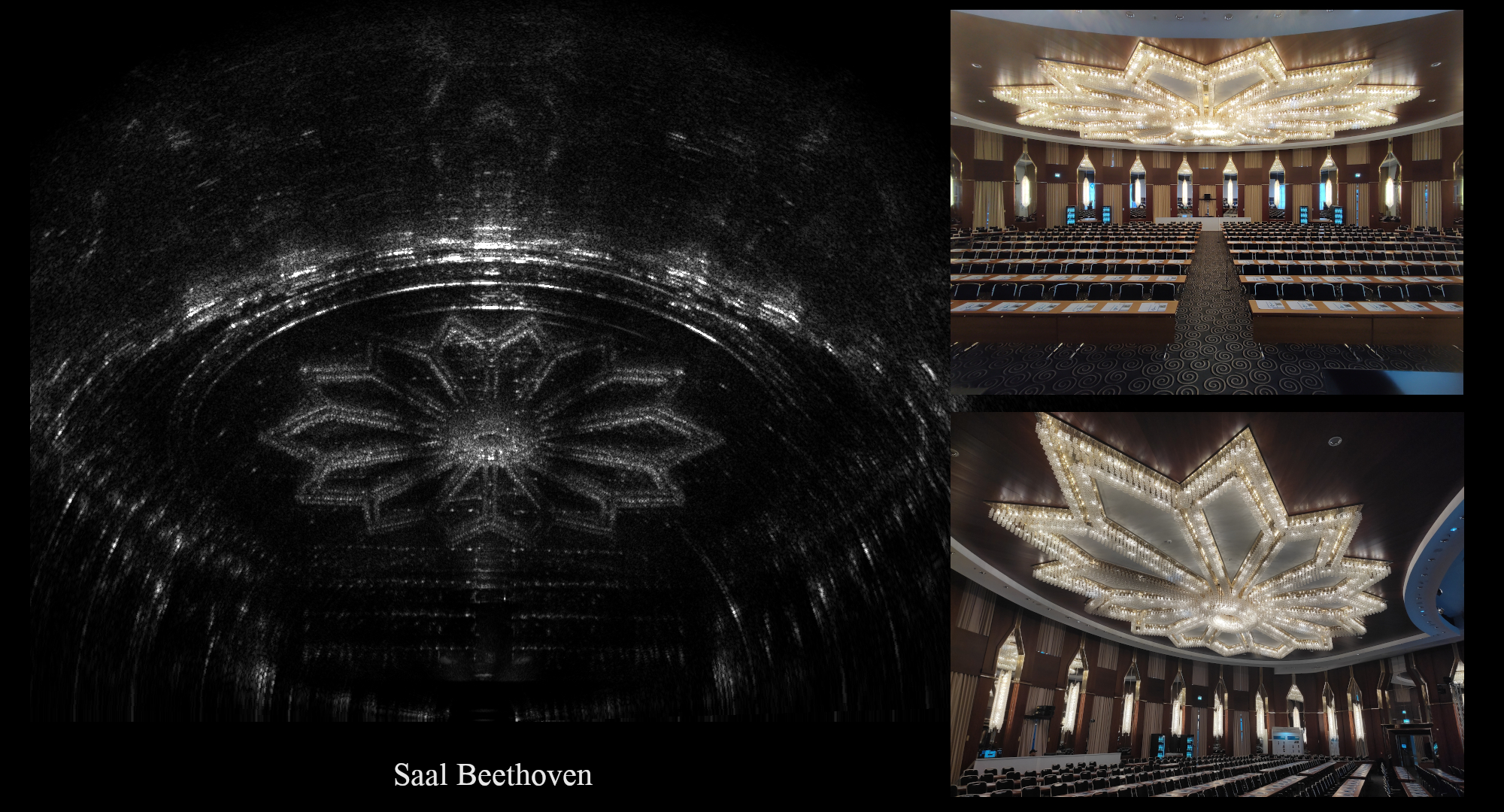
The approach is based on a Commercial off-the-Shelf (COTS) sensor architecture, enabling a practical, cost-efficient implementation of high-resolution SAR imaging and addressing both civilian and security-relevant dual-use applications.
Safe navigation in GPS-denied environments
How can DTS operate safely indoors under poor visibility conditions without GPS signals? Conditions such as darkness, smoke, or dust. To answer this question, researchers rely on a real-time capable SAR sensing system for ground-based environment sensing. A key aspect is the use of GPS-denied environments, such as interiors, shielded halls, or security-critical areas, for example for authorities and organizations with security tasks. In addition, real-time capable MIMO algorithms reliably detect obstacles along the path, enabling collision avoidance.
Hybrid radar sensor combines tried and true signal processing approaches
These sensor capabilities were combined in a hybrid radar sensor. The use of proven signal processing approaches such as SAR and MIMO enable cooperative DTS to operate autonomously in security areas. Automotive radar components are used in combination with real-time FPGA-based signal processing. The use of SAR imaging in GPS-less environments imposes particular challenges for the sensor’s motion compensation, which was addressed with a project-specific solution.
Digital twin enables rapid system development
To enable rapid integration into new deployment environments, researchers create a digital twin of the sensor system. This provides representative sensor data during the planning phase to train localization methods, for example. This preparation ensures the system is optimally suited for unknown environments. The demonstrator has already been presented at trade fairs, where the SAR imaging depicted real indoor spaces such as conference rooms with seating and ceiling structures. The results underscore the potential of COTS-based SAR sensing as a robust key technology for autonomous systems in security-critical indoor environments. During the project’s final demonstration, these capabilities were demonstrated by a group of four demonstrator systems in a realistic environment.